
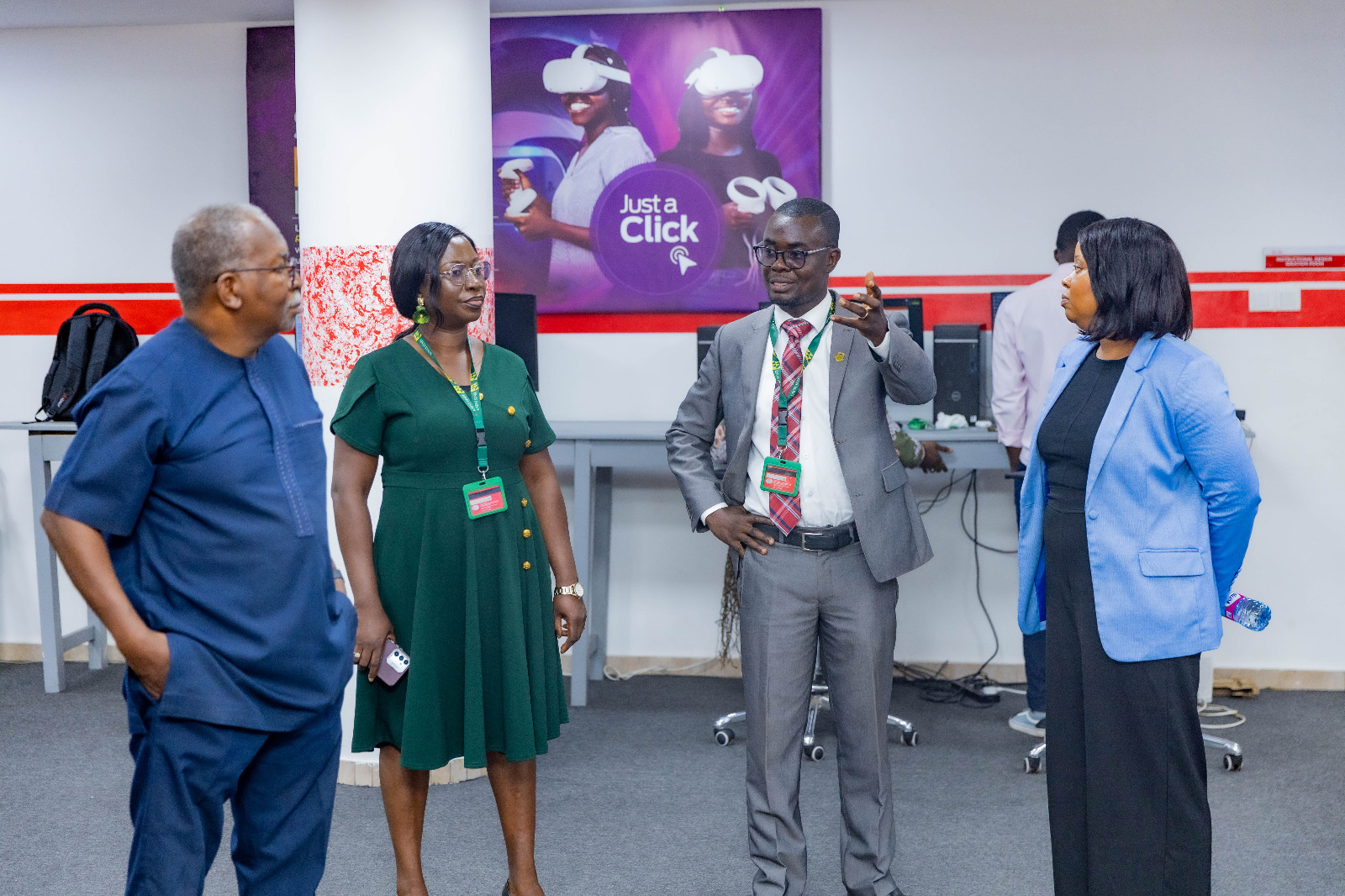

The KNUST E-Learning Centre has begun talks on how digital learning systems and skills training can support Ghana’s 24-Hour Economy policy, following a visit by officials from the national secretariat leading the programme.
The discussion was on how universities can help train students and graduates with skills that fit round-the-clock work models, including online service delivery, digital content work, and business process outsourcing.
Officials from the 24-Hour Economy Secretariat met with the leadership of the KNUST E-Learning Centre at the university campus to explore areas of collaboration linked to the Business Processing Outsourcing (BPO) agenda.
The delegation was led by Mr. Kyeretwie Opoku, Coordinator of the 24-Hour Economy Secretariat, and Samlara Baah Koduah, Lead for Show24. They held closed-door discussions with Prof. Emmanuel Kofi Akowuah, Director of the KNUST E-Learning Centre, and Abigail Dzama Anderson, Senior Assistant Registrar at the Centre.

At the meeting was the question of how technology-driven learning can move beyond teaching and focus more on skills use, reskilling, and work readiness. The officials examined how online platforms, digital assessment systems, and instructional design can be used to prepare learners for jobs that operate across time zones.
Prof. Akowuah told the meeting that e-learning should not be reduced to computers alone but should be seen as a full system that connects teaching methods, digital tools, and access to learning.
“E-learning is about how we teach, how people access content, and how learning continues after class. If a technology helps teaching and learning, then it belongs in this space.” he said.
He explained that KNUST has already invested in digital systems that support online courses, computer-based examinations, and large-scale assessment. According to him, the challenge now is to scale these systems so that more students and programmes can benefit.
Samlara Baah Koduah, said the 24-Hour Economy policy depends on a steady supply of trained people who can work in digital services, including outsourced business support and remote operations.
“What we want to understand is how institutions like KNUST can help create a clear pipeline of skills. If students can gain these skills while still in school, it helps both the economy and the individual.” she said.
The meeting also explored how the university’s digital infrastructure could support training beyond regular students, including alumni and members of the wider community.
Discussions touched on the need for reliable internet, secure data systems, and learning platforms that can support large numbers of users.
Participants agreed that further technical work is needed to define scope, infrastructure needs, and operational models before any formal partnership is announced. A follow-up process is expected to look at design requirements, governance structures, and possible pilot programmes.