


The KNUST E-Learning Centre has concluded its Executive Leadership Development Short Course 2.0, bringing together university leaders, administrators, lecturers and digital transformation professionals to discuss the future of higher education.
The six-day programme was on leadership, governance, digital transformation, academic excellence and institutional development.
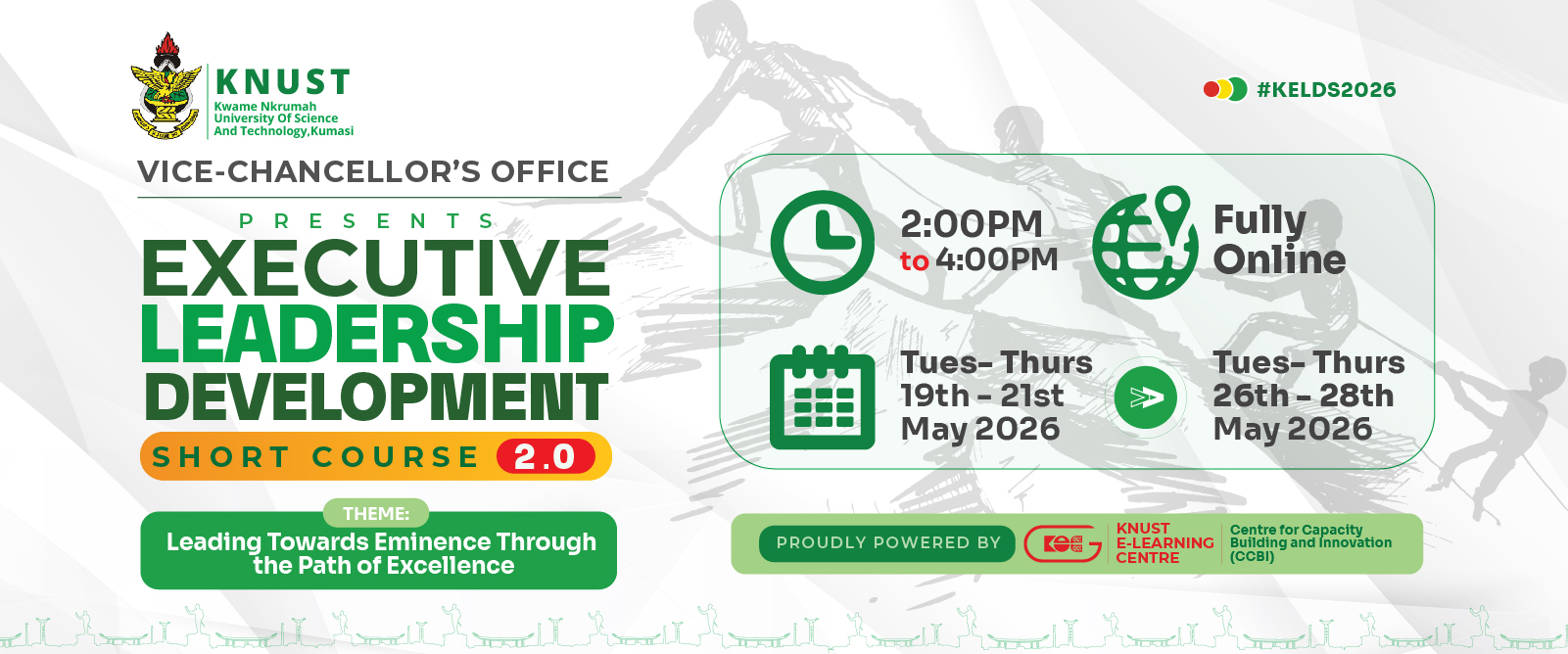
It was organised to strengthen leadership capacity across the university and equip participants with skills needed to respond to changes in higher education.
The course featured parallel sessions designed for different groups of participants. These included senior administrators, academic leaders, lecturers, information technology directors, chief information security officers and digital heads.

One of the sessions for academic leaders was led by former Director-General of the Ghana Tertiary Education Commission (GTEC), Prof. Mohamed Salifu.
He challenged participants to move beyond achieving excellence in isolated areas and work towards institutional eminence.
According to Prof. Salifu, eminent universities are built through decisions made at the departmental level.
He stressed the need for clear graduate profiles for every academic programme, structured mentorship systems for young academics and balanced workloads that support teaching, research and administration.
He also encouraged Heads of Department and Deans to establish accountability systems that would help track progress and improve performance across faculties and colleges.

The digital transformation track focused on infrastructure modernisation and the future of information technology in universities.
The session was facilitated by technology consultant and AI strategist Mr. Akwasi Kwarteng Adjei.
He explained that digital transformation goes beyond purchasing new technology.
According to him, institutions must redesign processes and operations to achieve meaningful change.
Discussions covered cloud computing models, smart campus technologies, cybersecurity, artificial intelligence and infrastructure planning.
Participants examined how AI can support teaching, learning, research and administrative operations in universities.
The course also addressed governance and administration.

Participants were encouraged to strengthen accountability systems, improve service delivery, manage institutional risks and promote integrity in their daily work.
Administrators were reminded that leadership goes beyond routine paperwork and requires vision, planning and implementation discipline.
The final day of the programme was held online and focused on reflection, evaluation and synthesis of lessons learned throughout the course.
Participants presented summaries of key lessons from the various tracks and discussed practical challenges related to institutional transformation and change management.
They agreed that digital transformation has become a requirement for the future of higher education and highlighted the importance of continuous professional development.

Facilitators urged participants to commit to lifelong learning, ethical leadership, innovation and teamwork.
They also encouraged them to build systems that would continue to support the university long after individual office holders have moved on.
Speaking at the closing session, the Director of the KNUST E-Learning Centre, Prof. Emmanuel Kofi Akowuah, thanked university management, facilitators and participants for their contributions.
He announced that digital certificates would be issued to participants who successfully met the attendance and evaluation requirements.